


Welcome, Sandbox friends.
Today’s Daily discusses:
portfolio perspectives: stocks, IPOs, and higher interest rates
Let’s dig in.
Blake
Markets in review
EQUITIES: Russell 2000 +1.79% | Nasdaq 100 +1.76% | S&P 500 +0.61% | Dow -0.23%
FIXED INCOME: Barclays Agg Bond +0.28% | High Yield +0.34% | 2yr UST 4.041% | 10yr UST 5.023%
COMMODITIES: Brent Crude -2.34% to $86.21/barrel. Gold -0.36% to $4,540.1/oz.
BITCOIN: +0.07% to $75,951
US DOLLAR INDEX: -0.09% to 99.15
CBOE TOTAL PUT/CALL RATIO: 0.85
VIX: +2.53% to 17.01
Quote of the day
“The most difficult times for many of us are the ones we give ourselves.”
- Pema Chödrön
A walk around markets
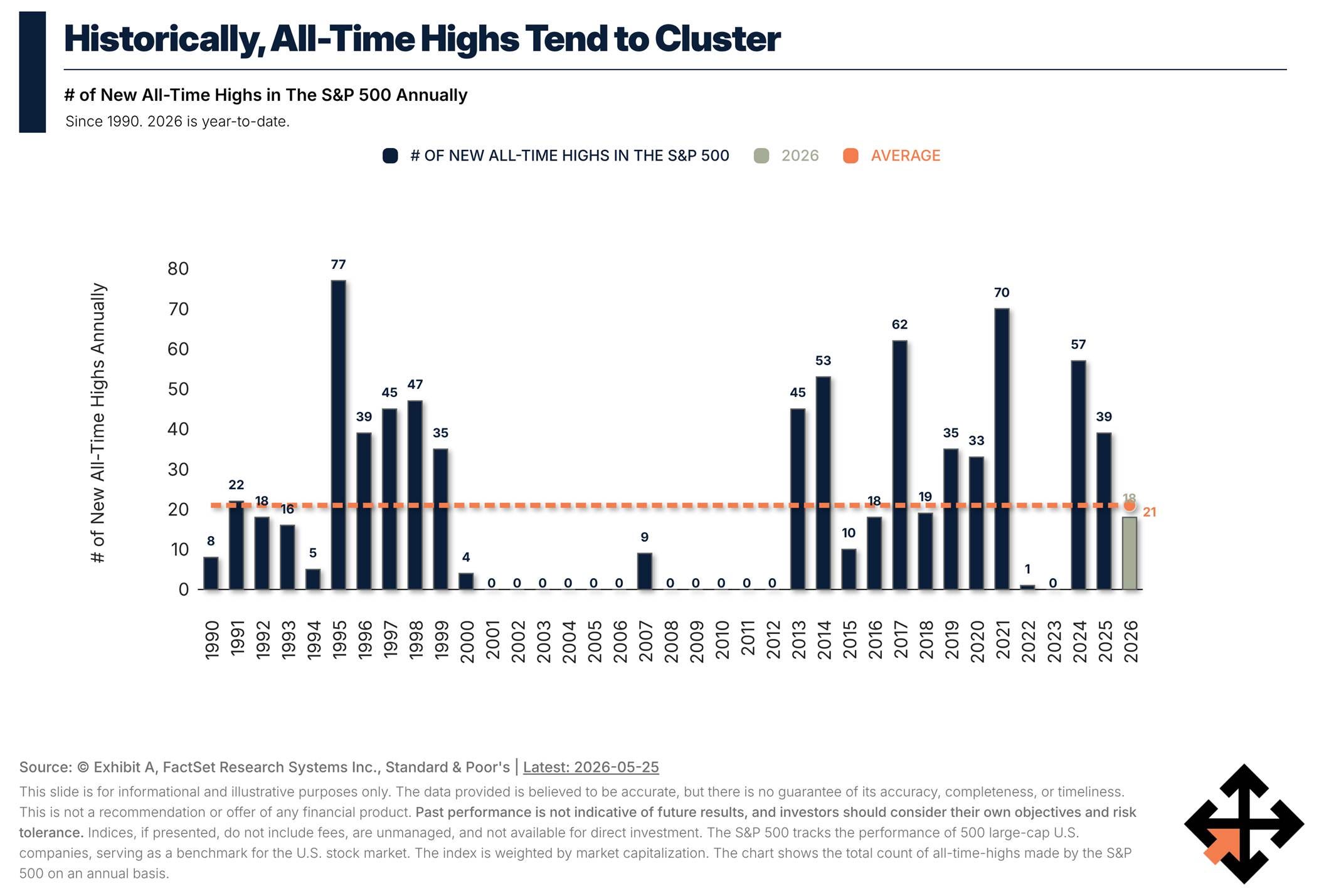
This month, the S&P 500 surpassed 7,500 for the first time, marking another milestone in a year that has seen 18 new all-time highs, just a few shy of the average of 21 per year since 1990.
This is positive for the average long-only investor, especially because many sectors have contributed to this rally off the late March lows. These strong dynamics across global equity markets have also sparked enthusiasm for IPOs, particularly ones related to artificial intelligence, after years of relatively few companies going public.
This is occurring despite ongoing concerns over high oil prices, inflation risks, and an Iran peace deal that remains elusive.
In contrast to the stock market, these challenges have weighed on the bond market, pushing long-term interest rates higher. The 30-year U.S. Treasury yield, for instance, briefly reached a nearly 20-year high before settling back toward 5%.
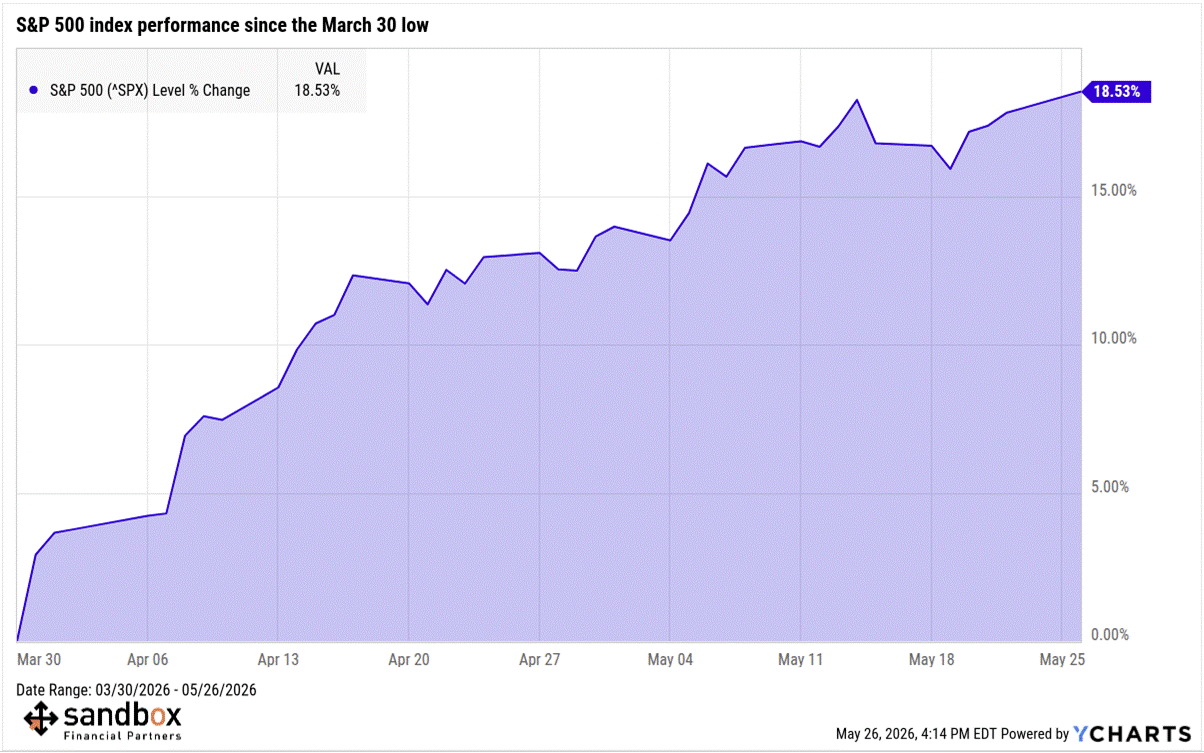
With the S&P 500 now higher by 18.5% since the end of March, many investors remain cautious and are looking for a pullback. While headlines can create uncertainty for markets, maintaining perspective and balance are more important than ever.
Tech stocks, earnings are pushing stocks higher in Q2
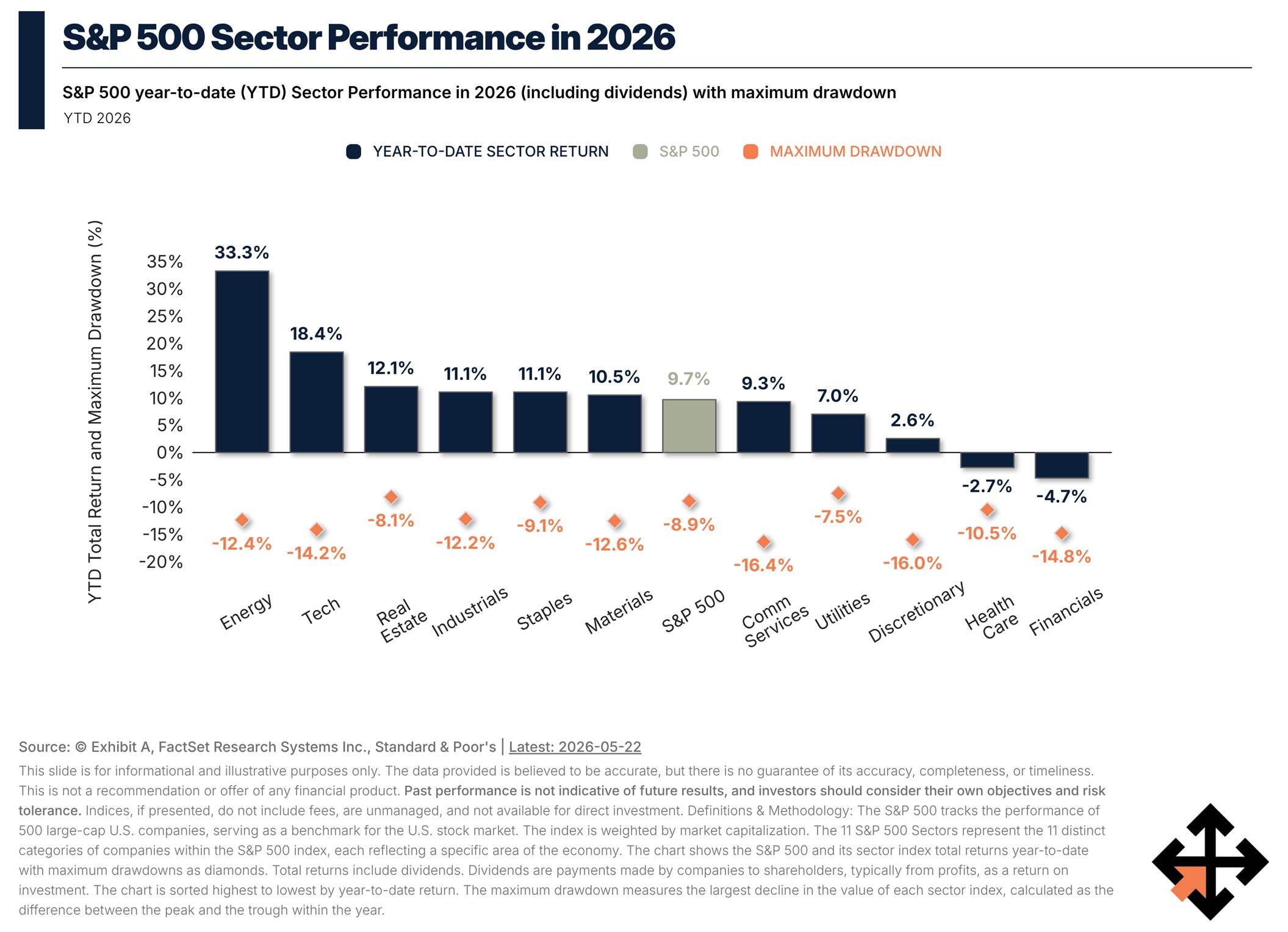
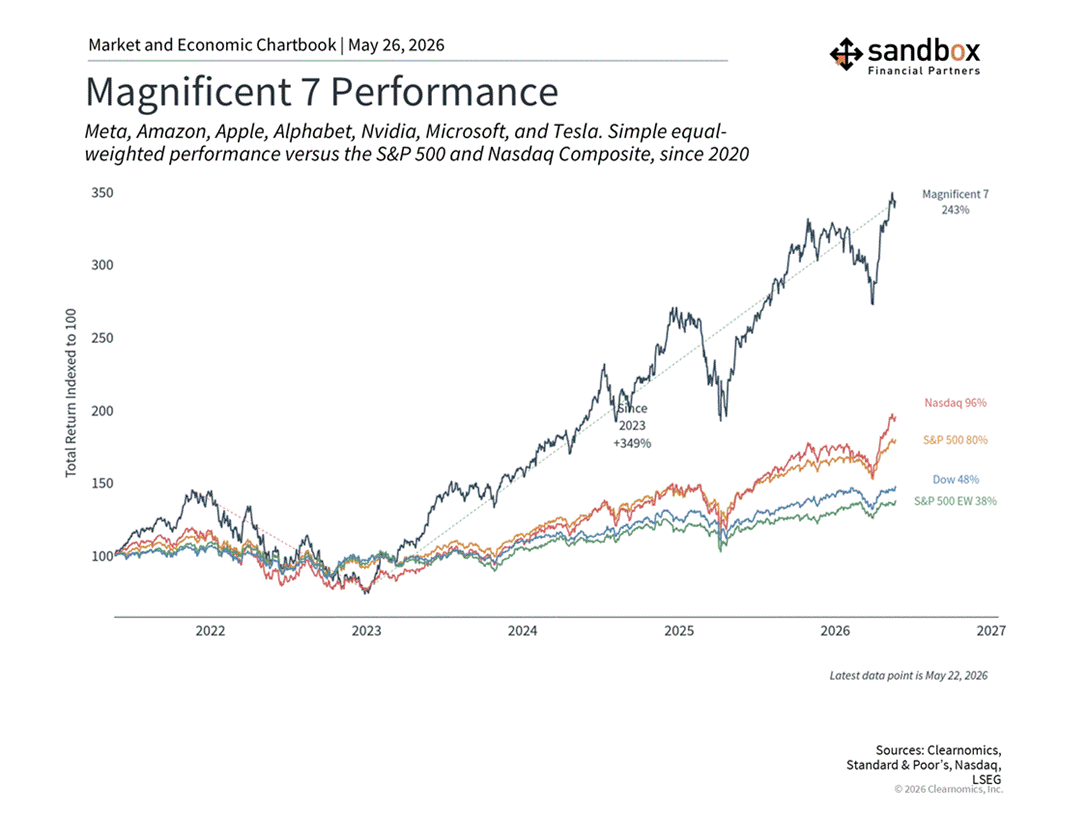
While the Energy sector continues to lead the market (+33% YTD), Tech-related stocks have come roaring back and returned to their old form in Q2.
The Magnificent 7 – Apple, Microsoft, Nvidia, Amazon, Alphabet, Meta, and Tesla – now represents roughly 35% of the S&P 500. This emphasizes the importance of portfolio construction, since some investors likely don’t realize how much exposure they have to these individual companies today.
What has supported the market rally is not just improving sentiment and positioning, but more importantly, strong fundamentals.
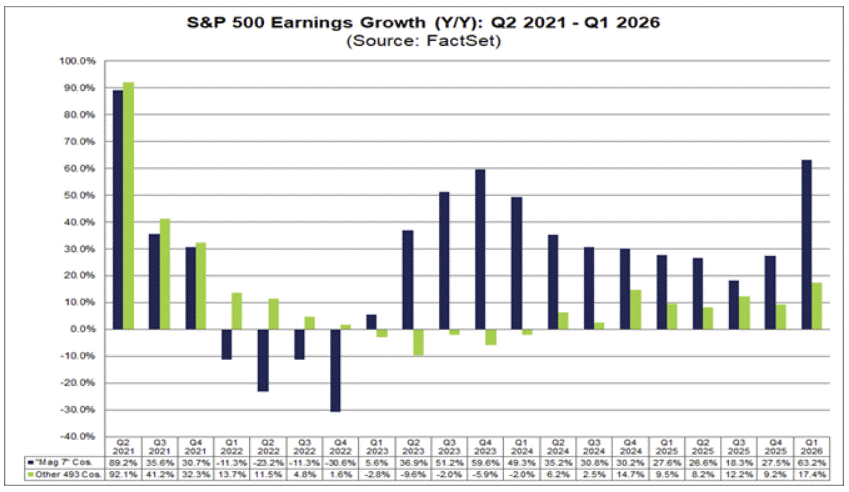
S&P 500 earnings growth for Q1 has been running hot – an eye-popping +28% EPS year-on-year growth – and far above the 10-year average earnings growth rate of +10.3%, while all seven Tech behemoths delivered positive earnings surprises.
That said, valuations have also crept higher alongside prices.
The S&P 500 forward price-to-earnings ratio currently sits near 21x, above the historical average of 16x. Technology stocks specifically trade at a forward P/E around 24x.
While elevated valuations do not predict short-term market moves, they are an important consideration for long-term investors thinking about asset allocation.
IPO activity is returning to public markets
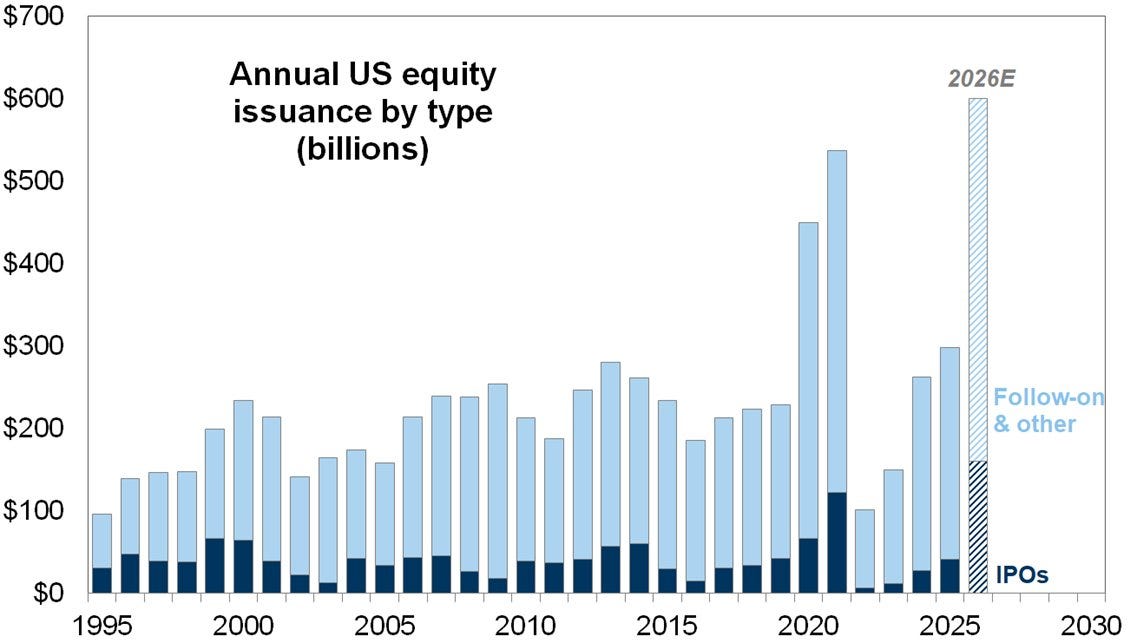
The stock market is constantly evolving. Companies merge, fail, or go public through IPOs, which means today’s investment landscape looks very different than it did a decade ago.
The Wilshire 5000 Index, for example, was originally designed to include roughly 5,000 companies but now holds closer to 3,400 as more businesses stay private longer.
Later this year, the buzz around companies like SpaceX, Anthropic, and OpenAI will overwhelmingly dominate headlines along their respective IPO launch dates and garner wide interest from investors.
Many of these firms grew through private capital, limiting access for everyday investors. As these companies eventually go public, broad market indices will add them over time, allowing index investors exposure without needing to chase IPO hype directly.
And hype is often exactly what IPOs create. While headlines can spark excitement about “getting in early,” institutional investors and insiders typically own shares long before the public offering.
IPO booms also tend to cluster during periods of easy money and strong market optimism, from the dot-com era to the recent SPAC wave, reminding investors why IPOs carry downside risks as well.
How big is the coming wave of equity supply in 2026? In one word: BIG.
Long-term interest rates have remained elevated
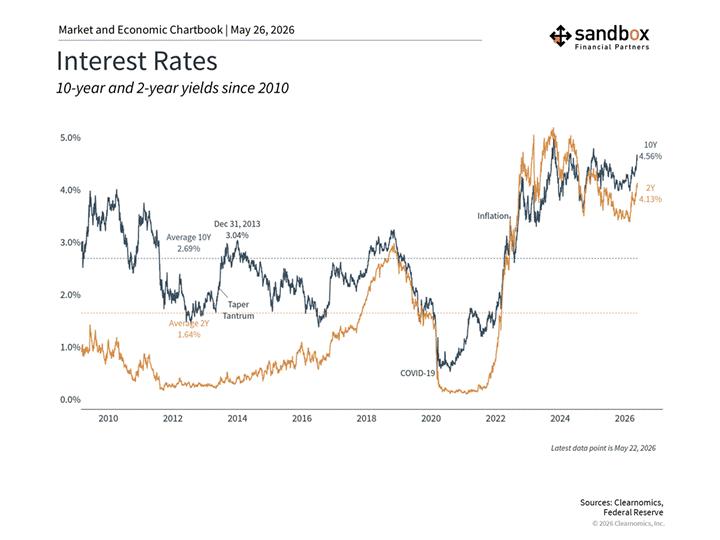
While the stock market has been climbing to new highs, long-term interest rates have also been rising. Higher rates are often associated with more challenging equity markets.
The rise in yields is primarily due to inflation concerns, complicating the path of Fed policy over the next year.
Higher interest rates have a wide range of implications across the economy and markets. Mortgage rates have moved up, with the 30-year fixed rate now around 6.5%, above the long-term average of 6.02% since 1990. Higher rates also influence the cost of capital for businesses and the discount rate applied to future earnings, which can affect stock valuations, particularly for growth-oriented companies whose value depends heavily on future cash flows.
At the same time, higher interest rates mean that:
1.) bonds are now offering more meaningful income and
2.) bonds compete more directly for capital.
Investment grade corporate bonds yield 5.3%, compared to a long-term average of 3.8%. Treasurys yield 4.4%, well above their historical average of 2.2%.
For more cash-flow oriented investors, this creates attractive opportunities across fixed income.
Bottom Line
Markets continue to climb higher on strong earnings and broad participation, but elevated valuations, rising interest rates, and renewed IPO enthusiasm are reminders that optimism and risk often move together.
In environments like this, long-term success is typically driven less by reacting to headlines and more by staying diversified, balanced, and focused on durable trends.
Sources: Exhibit A, YCharts, FactSet, Clearnomics, JPMorgan
That’s all for today.
Blake
Questions about your financial goals or future?
Connect with a Sandbox financial advisor – our team is here to support you every step of the way!
Welcome to The Sandbox Daily, a daily curation of relevant research at the intersection of markets, economics, and lifestyle. We are committed to delivering high-quality and timely content to help investors make sense of capital markets.
Blake Millard is the Director of Investments at Sandbox Financial Partners, a Registered Investment Advisor. All opinions expressed here are solely his opinion and do not express or reflect the opinion of Sandbox Financial Partners. This Substack channel is for informational purposes only and should not be construed as investment advice. The information and opinions provided within should not be taken as specific advice on the merits of any investment decision by the reader. Investors should conduct their own due diligence regarding the prospects of any security discussed herein based on such investors’ own review of publicly available information. Clients of Sandbox Financial Partners may maintain positions in the markets, indexes, corporations, and/or securities discussed within The Sandbox Daily. Any projections, market outlooks, or estimates stated here are forward looking statements and are inherently unreliable; they are based upon certain assumptions and should not be construed to be indicative of the actual events that will occur.
Please see additional disclosures (click here)
Please see our SEC Registered firm brochure (click here)
Please see our SEC Registered Form CRS (click here)