


Welcome, Sandbox friends.
Today’s Daily discusses:
credit scores
Let’s dig in.
Blake
Markets in review
EQUITIES: Nasdaq 100 +1.04% | S&P 500 +0.58% | Russell 2000 +0.04% | Dow -0.14%
FIXED INCOME: Barclays Agg Bond +0.04% | High Yield +0.05% | 2yr UST 3.977% | 10yr UST 4.467%
COMMODITIES: Brent Crude -2.06% to $105.55/barrel. Gold +0.22% to $4,697.1/oz.
BITCOIN: -1.48% to $79,432
US DOLLAR INDEX: +0.17% to 98.46
CBOE TOTAL PUT/CALL RATIO: 0.84
VIX: -0.67% to 17.87
Quote of the day
“Life can only be understood backwards; but it must be lived forwards.”
- Søren Kierkegaard
Your credit score
A question came up today during a meeting that seemed so obvious to answer, it should have been a layup. Truth be told, I shot an airball.
“What makes up your credit score?”
But, before we address score calculation, let’s review why credit scores are so important.
When you need to borrow money, you want to do it as cheaply as possible. This means you want a great interest rate and terms that help you repay your debt as efficiently as possible.
Generally speaking, the higher your credit score, the more likely you are to get the best interest rate and loan terms. Over the course of your life, a good credit score can save you a significant amount of money.
Alright, back to the question at hand.
The Fair Isaac Corporation, more commonly known as “FICO,” developed the FICO Score system in 1989.
Scores range from 300 to 850. The higher the number, the better your score.
Creditors use a credit score to assess your creditworthiness. In other words, it helps lenders decide the probability of you repaying a loan or a line of credit in a timely manner based on your past behavior.
The FICO ranges look like this:
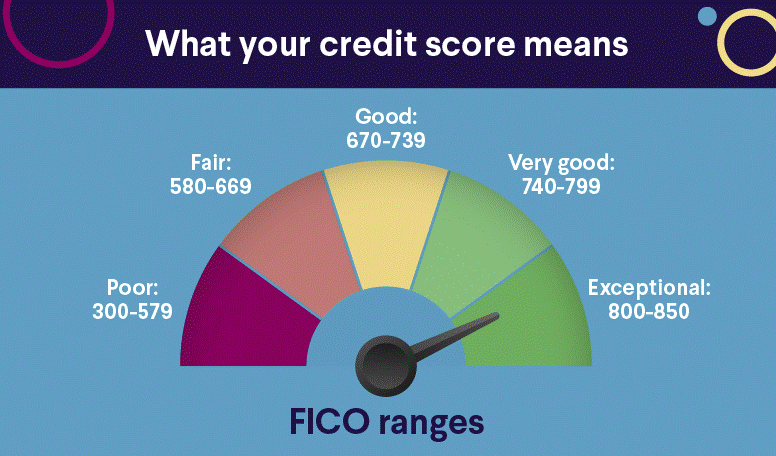
Knowing what contributes to your credit score can help you get your score into the desired range.
FICO scores are calculated based on how a consumer handles debt and is weighted according to the following categories:
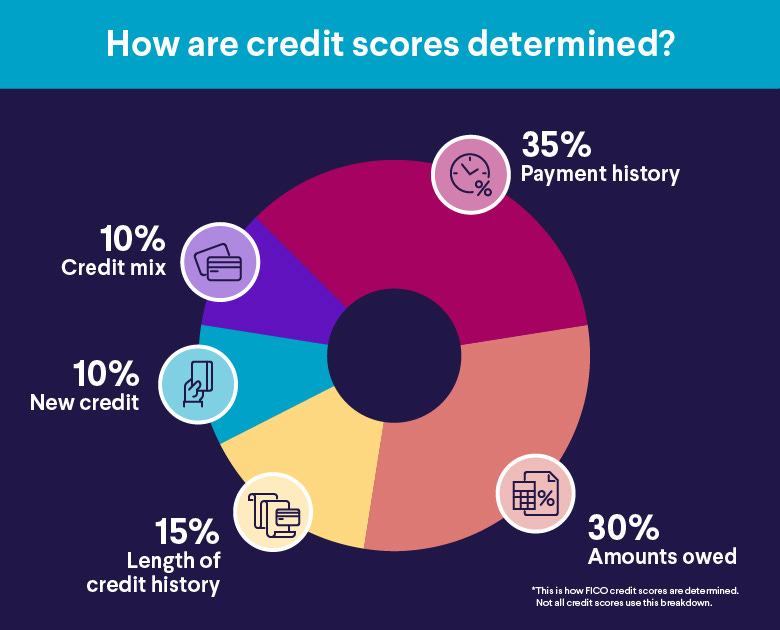
As you can see, FICO scores give the most weight to your payment history and amounts owed. Pretty straight forward.
FICO also considers your length of credit history (longer the better), credit mix (what kind of accounts you’ve had), and new credit (are you opening a bunch of new accounts).
Other providers exist as well. The three major credit bureaus are Experian, Equifax, and Transunion. Each has their own system but follow similar criterion.
Ultimately, credit card issuers, auto loan lenders, and mortgage originators will use different scores and methodologies to make its consumer lending decisions.
Bottom line?
Understanding the components to your credit score is crucial, and regularly reviewing it can help individuals and families gauge their financial health and make more informed decisions about loans or credit products.
That’s all for today.
Blake
Questions about your financial goals or future?
Connect with a Sandbox financial advisor – our team is here to support you every step of the way!
Welcome to The Sandbox Daily, a daily curation of relevant research at the intersection of markets, economics, and lifestyle. We are committed to delivering high-quality and timely content to help investors make sense of capital markets.
Blake Millard is the Director of Investments at Sandbox Financial Partners, a Registered Investment Advisor. All opinions expressed here are solely his opinion and do not express or reflect the opinion of Sandbox Financial Partners. This Substack channel is for informational purposes only and should not be construed as investment advice. The information and opinions provided within should not be taken as specific advice on the merits of any investment decision by the reader. Investors should conduct their own due diligence regarding the prospects of any security discussed herein based on such investors’ own review of publicly available information. Clients of Sandbox Financial Partners may maintain positions in the markets, indexes, corporations, and/or securities discussed within The Sandbox Daily. Any projections, market outlooks, or estimates stated here are forward looking statements and are inherently unreliable; they are based upon certain assumptions and should not be construed to be indicative of the actual events that will occur.
Please see additional disclosures (click here)
Please see our SEC Registered firm brochure (click here)
Please see our SEC Registered Form CRS (click here)